ONLINE VET for pets skipping meals
Not Eating?
Here’s Why
And What To Do Next
Same-day online vet consultations for dogs and cats that have stopped eating or are only picking at food. Get a clear read on the hidden causes, the timeline that matters, and whether same-day care is needed.
Same-day advice • Dogs and cats • No clinic visit needed
Australian registered vets
Same-day consult
From $49
Beyond the Obvious
The Hidden Causes Checklist for Pets That Stop Eating
Loss of appetite is rarely just about food. Dental pain, nausea, stress, medication side effects and even early organ disease can all sit behind a dog or cat that suddenly stops eating — and telling picky eating apart from true anorexia is often the first clue to how urgent things are.
Our online vet consultations help you work through the checklist below, understand which timeline applies to your pet, and decide whether same-day care is needed — all from the comfort of your home.
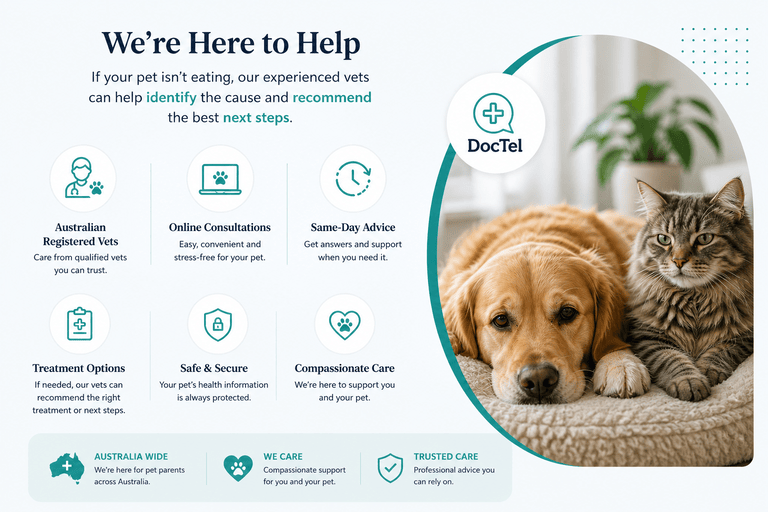
Checklist: The Less Obvious Reasons Pets Skip Meals
- Dental pain or mouth discomfort that makes chewing hard
- Nausea or an upset stomach
- Stress, anxiety or a change in routine
- Pickiness or a mild preference rather than true illness
- Parasites or low-grade infections
- Underlying organ disease, such as kidney, liver or pancreas problems
- Recent vaccination or lingering anaesthetic effects
- Medication side effects
- Pain or injury elsewhere in the body, not just the mouth
- Ageing, dental disease or a reduced sense of smell in senior pets
- A new food, bowl or feeding location
- Possible toxin exposure
Timeline Urgency: How Long Is Too Long?
The safe timeline is not the same for every pet. Cats that refuse all food for even 24 to 48 hours are at real risk of hepatic lipidosis (fatty liver disease) and need prompt attention. Dogs generally have a little more buffer, but puppies, small breeds and seniors should be seen sooner.
Complete vs Partial Appetite Loss
Skipping part of a meal is different from refusing all food outright. A dog or cat that eats half a bowl or takes treats but ignores its usual kibble is showing partial appetite loss, which is generally less urgent than true anorexia — eating nothing at all for a full day. Complete anorexia is the bigger red flag in both species, but it carries a much shorter safe window in cats than in dogs.
Not Eating But Still Drinking
A pet that keeps drinking but won’t touch food is often nauseous rather than simply fussy — nausea can suppress appetite while thirst stays normal or even increases. Lip-licking, drooling or a hunched posture alongside reduced eating are worth watching for, as they tend to appear together. If this pattern lasts more than a day, same-day advice helps rule out gastrointestinal upset or an underlying illness.
Puppies, Kittens and Small Breeds
Young and small-breed animals have far less energy reserve than a full-grown, medium or large dog. A puppy or kitten that skips even one or two meals and seems lethargic, wobbly or unusually quiet can develop low blood sugar faster than an adult pet would. Toy breeds are especially vulnerable, so it is worth seeking advice sooner rather than waiting out the usual 24-hour buffer.
Senior Pets Losing Weight
Appetite loss combined with visible weight loss in an older dog or cat rarely resolves on its own. It can point to dental disease that makes chewing painful, early kidney or liver changes, or other age-related conditions that develop gradually and are easy to miss day to day. Because seniors often have less physical reserve to draw on, a slow decline over a week or two still deserves the same attention as a sudden refusal to eat.
Dogs: A Little More Buffer
Healthy adult dogs can often go a day or so without food while you monitor them at home, offering water and a favourite treat to check whether they are truly refusing or just being fussy. This buffer does not apply the same way to unwell, elderly or very young dogs. Seek advice if there’s no improvement within 24 to 48 hours, or if vomiting, lethargy or other symptoms appear alongside the appetite loss.
Cats: Don’t Wait on Hepatic Lipidosis
Cats that stop eating completely for 24 to 48 hours are at real risk of hepatic lipidosis, a serious and sometimes life-threatening liver condition that develops when a cat’s body mobilises fat too quickly to compensate for missed meals. Overweight cats are particularly susceptible, and the process can progress faster than owners expect. This is why same-day advice matters more for cats than for dogs — the safe window is genuinely shorter.
Cat Not Eating After Dental Work
Mouth discomfort, a swollen jaw or lingering grogginess from anaesthesia can all suppress a cat’s appetite for a day or so after a dental procedure. Softened or warmed food often tempts a recovering cat back to eating sooner than dry kibble alone. If eating hasn’t resumed within 24 hours, or your cat seems painful, is drooling excessively, or won’t drink either, get advice promptly rather than waiting out the usual buffer.
Skipping Meals From Stress
New environments, visitors, a house move, or even a new pet in the home can put dogs and cats off their food for a day or two. Cats tend to be more sensitive to routine change than dogs and may also hide more than usual while settling back in. It usually resolves quickly on its own, but persistent refusal beyond 24 to 48 hours still needs a vet check to rule out something more than stress.
Appetite loss rarely travels alone, and it is the company it keeps that often decides how quickly you need to act. A dog or cat that has stopped eating but is otherwise bright, drinking normally and toileting as usual is a very different picture from one that is also vomiting, has diarrhoea, or will not touch water either.
That second combination — appetite loss alongside vomiting or diarrhoea — points toward gastrointestinal upset, an infection, or in some cases a toxin exposure, and it needs same-day attention rather than a wait-and-see approach. Dehydration can set in faster than owners expect once a pet has stopped both eating and drinking properly, which shortens the safe window described in the timeline above.
If you are unsure whether what you are seeing fits the “monitor for now” picture or the “get help today” picture, that judgement call is exactly what an online vet consultation can help you make quickly.
Not Sure If It’s Urgent? Ask an Australian Vet
Our Australian-registered vets can help you work through the hidden causes checklist, check where your pet sits on the timeline, and advise on next steps — all from home.
Get Clarity on Your Pet’s Appetite Loss Today
Whether it’s a dog quietly skipping meals or a cat that hasn’t eaten in a day, it helps to know whether you’re still in the safe monitoring window or need same-day care. Book a consultation with one of our Australian-registered vets and get a clear answer, plus practical next steps for your pet.
Medical Causes of Appetite Loss a Vet May Consider
Veterinarians distinguish reduced appetite or hyporexia from complete anorexia and from pseudo-anorexia, where a pet wants to eat but cannot comfortably pick up, chew or swallow food. Dental disease, fractured teeth, oral ulcers, jaw pain, nausea, pancreatitis, gastrointestinal obstruction, constipation, fever, medication adverse effects and pain elsewhere in the body can all cause this pattern.
Persistent appetite loss may also occur with kidney disease, liver disease, diabetes mellitus, Addison’s disease, infection, inflammatory bowel disease or cancer. Cats that eat very little for several days are at risk of hepatic lipidosis, while puppies, kittens, toy breeds, senior pets and animals with diabetes or other chronic disease can deteriorate more quickly than healthy adults.
An online consultation can assess the timeline, behaviour, water intake, urination, vomiting, diarrhoea, weight change and any visible mouth problem, but blood tests, dental examination, abdominal palpation and diagnostic imaging require an in-person clinic. Seek urgent care for repeated vomiting, a swollen or painful abdomen, difficulty breathing, collapse, pale gums, suspected toxin exposure, inability to swallow, or a cat that has stopped eating completely. Related guidance is available on our vomiting and diarrhoea page and poisoning page.
Appetite Loss FAQs: Timelines, Causes and Cat-Specific Risks
Why is my dog not eating?
Dogs may stop eating due to illness, infection, dental pain, nausea, stress, or a change in routine. A dog that skips one meal but is otherwise bright and active is usually less urgent than a dog refusing all food. If appetite loss continues beyond a day, veterinary assessment is recommended.
Why is my cat not eating?
Cats may stop eating due to illness, dental pain, nausea, stress, or an underlying condition. Because cats can develop a serious liver condition called hepatic lipidosis when they stop eating completely, even a day or two of true anorexia in a cat should prompt a vet visit.
How long can a pet go without eating?
This depends on the animal and whether it’s partial or complete appetite loss. Cats should not go more than 24 to 48 hours without any food, due to the risk of hepatic lipidosis. Dogs generally have a little more buffer, but puppies, small breeds, seniors and unwell pets need attention sooner.
When should I worry about loss of appetite?
A little pickiness or a smaller-than-usual meal is common and often resolves on its own. True anorexia — refusing all food — combined with vomiting, lethargy, weight loss, or pain is more concerning, and this distinction matters most in cats, where complete appetite loss is urgent.
Can a vet diagnose this online?
Yes. Online vets can assess symptoms, review history, and recommend treatment or further care if needed. Some presentations may still require a follow-up in-person examination.
How quickly can I speak to a vet?
Same-day consultations are typically available, allowing you to speak to an Australian-registered vet within hours of booking.
Why is my dog not eating but acting normal?
Some dogs skip meals due to mild stomach upset, stress, a change in routine, or simple food preferences. If your dog is otherwise active and behaving normally, monitor them closely for 24 to 48 hours. If appetite doesn’t return, or your dog seems unwell, seek veterinary advice.
Why is my cat not eating but drinking water?
Cats may keep drinking even when they’ve stopped eating, due to nausea, dental pain, stress, or illness. This combination should not be ignored — cats that go without food for more than 24 to 48 hours are at risk of hepatic lipidosis, so a vet assessment is recommended promptly.
How long can a dog go without eating?
Most healthy adult dogs can go a day or two without food, though this isn’t ideal. Puppies, small or toy breeds, and senior dogs have less reserve and can become lethargic more quickly, so they need veterinary advice sooner if they skip meals.
What should I do if my cat refuses food?
If your cat refuses food, keep fresh water available and watch for vomiting, lethargy, or weight loss. Don’t wait more than 24 hours before seeking veterinary advice — in cats, prolonged loss of appetite can progress to hepatic lipidosis, a serious liver condition.
How long can a cat go without eating before it’s dangerous?
A cat that refuses all food for more than 24 to 48 hours is at real risk of hepatic lipidosis (fatty liver disease), which can become serious quickly. This is more time-critical than the general guidance for dogs, so cats with complete appetite loss should be seen sooner rather than later.
Why won’t my cat eat after a dental procedure?
Mouth discomfort, lingering grogginess from anaesthesia, or a sore throat can all reduce appetite for a day or so after a dental procedure. If your cat is still not eating more than 24 hours afterwards, or seems painful or unwell, contact your vet.

Online Vet Consultation
How booking, video consults and follow-up care work with DocTel VetCare
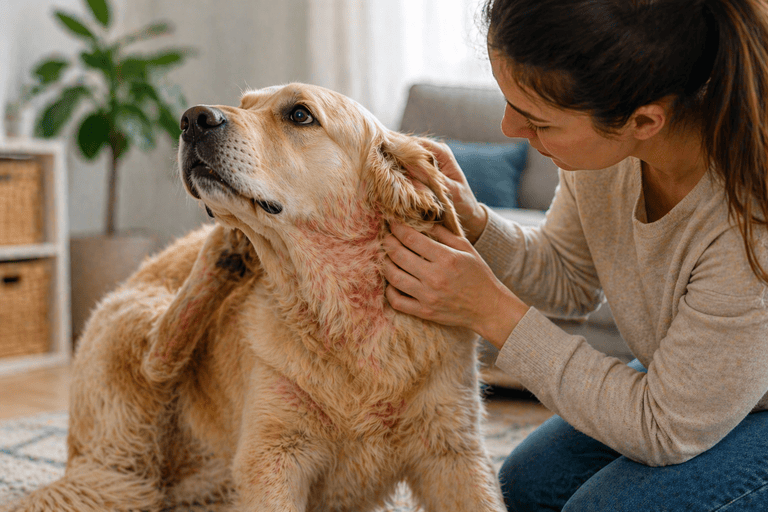
Pet Skin Allergy & Itching
Persistent itching or rashes? See our skin allergy guide

Pet Anxiety & Stress
Stress and anxiety can suppress appetite – here is how to help

Pet Vomiting & Diarrhea
Appetite loss and GI upset often overlap – read the full guide