Medical Cannabis in Australia
Safety, Standards and Regulatory Requirements
Introduction
Medical cannabis in Australia operates within one of the most tightly controlled frameworks in the world. While more Australians are exploring whether it may be suitable for them, the decision to prescribe is governed by regulation, safety protocols, and clinical oversight, not popularity or patient expectation.
This article focuses on the governance, patient responsibilities, product standards, and legal safeguards that shape medical cannabis access today.
Regulatory Oversight: How Australia Controls Medical Cannabis
Unlike many countries, Australia does not permit open commercial advertising or direct promotion of medical cannabis. Access is regulated by:
-
State/Territory health departments
Key principles:
Medical cannabis is not a listed therapeutic good
Most products are not on the ARTG, which means:
-
They are unapproved medicines
-
Prescribers require appropriate authorisation
Doctors must justify clinical need
A doctor must document:
-
Why conventional therapies were inadequate
-
Why medical cannabis is being considered
-
Whether risks outweigh potential benefits
There is no automatic entitlement.
Product Quality and Manufacturing Standards
Australian medical cannabis products must meet:
-
GMP (Good Manufacturing Practice) requirements
-
Batch testing for purity and consistency
-
Pharmaceutical-grade handling standards
Patients often misunderstand this part.
Medical cannabis is not:
❌ Recreational-grade
❌ Self-selected
❌ Over-the-counter
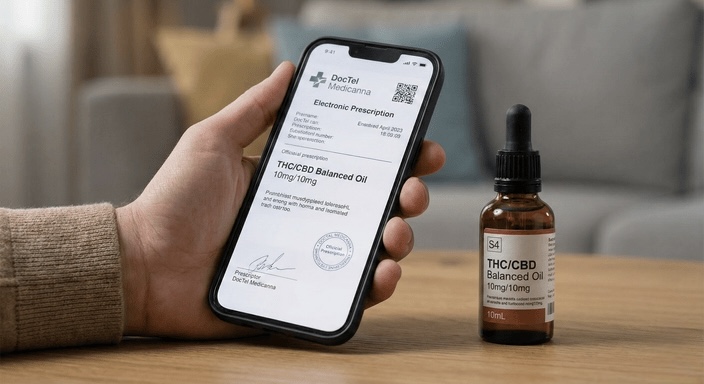
It is prescription medicine, manufactured to strict pharmaceutical controls, even though it is not listed on the ARTG.
The Evidence Framework: What Doctors Must Consider
Prescribing is based on:
-
Clinical judgement
-
Symptom history
-
Previous treatment attempts
-
Risk assessment
-
Contraindications
-
Monitoring plans
Doctors must follow:
A doctor cannot prescribe purely because a patient requests it.
The documentation must show:
-
Reasoning
-
Assessment
-
Monitoring plan
-
Education on risks
This protects both patient and practitioner.
Patient Responsibilities When Using Medical Cannabis
Because medical cannabis can contain psychoactive components, patients have responsibilities that go beyond typical prescription medicines.
Driving laws
Most states prohibit driving with any detectable THC — regardless of impairment.
Workplace safety
Employers may legally enforce:
-
Zero tolerance
-
Routine testing
-
Fitness-for-duty requirements
Safe storage
Products must be stored safely and securely, especially Schedule 8 medicines.
Follow-up appointments
Patients must attend regular reviews to remain compliant with prescribing requirements.
The Telehealth Pathway: What It Can and Cannot Do
Telehealth is a legitimate pathway for medical cannabis assessment, but only when it meets professional standards.
Telehealth can:
-
Provide a structured medical review
-
Allow clinicians to assess history, treatments, and risks
-
Issue prescriptions when clinically justified
-
Deliver ongoing follow-up and monitoring
Telehealth cannot:
-
Guarantee approval
-
Replace necessary physical examinations
-
Bypass state prescribing rules
-
Offer cannabis on request
The integrity of the process must be preserved.
Why Access Varies Between Patients
People often compare their outcomes to someone else’s, but medical cannabis prescribing decisions rely on:
-
Different medical histories
-
Different comorbidities
-
Different treatment failures
-
Different risk profiles
-
Different responsibilities (e.g., driving, high-risk work)
Two people with similar symptoms may reach entirely different outcomes — both legally and clinically valid.
Follow-Up, Monitoring, and Dose Adjustments
Medical cannabis requires:
-
Regular dose reviews
-
Monitoring side effects
-
Confirming whether standard therapies should be re-evaluated
-
Documentation for continued access
Doctors must continually reassess whether the treatment remains appropriate.
Misconceptions and Clarifications
Misconception 1: “Cannabis is a first-line option.”
Incorrect. It is considered after conventional options have been explored.
Misconception 2: “Telehealth doctors always approve it.”
Completely false. Proper clinical assessment is mandatory.
Misconception 3: “It treats specific conditions.”
TGA prohibits promoting therapeutic claims.
Prescribing is based on individual clinical assessment, not fixed indications.
Misconception 4: “Once approved, always approved.”
No. Medical reviews determine continuation.
The Role of Clinicians in Responsible Access
A clinician is responsible for ensuring:
-
Informed consent
-
Risk mitigation
-
Safety warnings
-
Clear documentation
-
Continuous review
-
Compliance with medical and legal standards
Medical cannabis is not a commercial product — it is a controlled medicine that requires oversight.
Conclusion
Medical cannabis access in Australia is built on regulation, safety, clinical evidence, and patient oversight. The goal is not promotion but responsible medical assessment within established guidelines.
Understanding your responsibilities, the clinical process, and the regulatory structure is essential for anyone exploring whether medical cannabis may be appropriate for them.




Your Health, Your Way — With DocTel
Discover a new era of healthcare with DocTel. Our platform is designed to provide you with personalized, convenient, and compassionate care. Take the first step towards a healthier you by booking a consultation today.